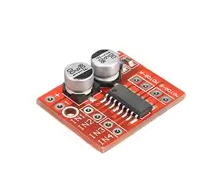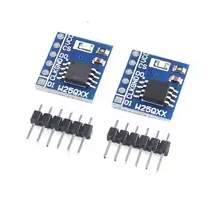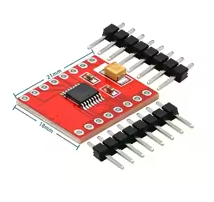
TB6612 DRV8833 DC Motor Driver Board Module Dual Motor Driver 1A TB6612FNG Microcontroller Better Than L298N – KSH 400 at HIMASTORES Mombasa – best electronics in Kenya

TB6612 DRV8833 DC Motor Driver Board Module Dual Motor Driver 1A TB6612FNG Microcontroller Better Than L298N

SKU: HMJ690 Category: Motors
KSH 400.00
Out of Stock

Product Description

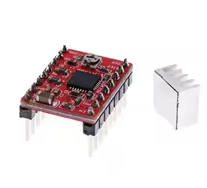
TB6612/DRV8833 Dual DC Motor Driver Board Module

1A Dual Motor Driver Microcontroller Better Than L298N

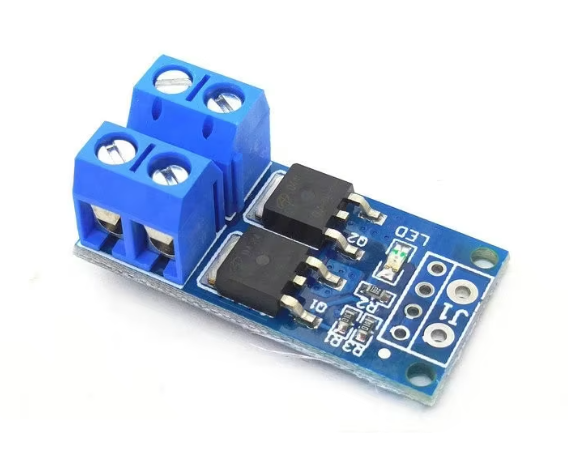
This highefficiency dual motor driver module features the TB6612FNG (or equivalent DRV8833) chip, offering superior PWM speed control for two DC motors or one stepper motor. As a modern MOSFETbased alternative to the classic L298N, it delivers higher efficiency and lower heat generation [citation:3].

Superior Efficiency - MOSFET design with lower voltage drop and less heat than L298N
Dual Motor Control - 1A continuous (3.2A peak) per channel with independent PWM
Motor supply voltage (VM) is 2.7V to 15V (TB6612) or 10.8V max (DRV8833) [citation:1][citation:2]
Pull STBY pin HIGH to activate; LOW enters low-power sleep mode [citation:2]
Do not exceed 15V on motor supply (VM) [citation:2][citation:6]

Technical Specifications

ParameterValue
Driver ICTB6612FNG / DRV8833
Logic Voltage2.7V to 5.5V
Motor Voltage (VM)2.7V to 15V [citation:2][citation:6]
Continuous Current1.2A per channel [citation:2][citation:6]
Peak Current3.2A per channel [citation:2]
PWM FrequencyUp to 100kHz [citation:2]
Control ModesCW, CCW, short-brake, stop

= Key Features =

MOSFET HBridge Higher efficiency than L298N's BJT design [citation:3]

Builtin Protection Thermal shutdown, overcurrent, undervoltage lockout [citation:3]

Standby Mode STBY pin for ultralow power sleep [citation:1][citation:2]

Compact Form Factor - Small footprint for tight projects [citation:1]

Four Control Modes Forward, reverse, shortbrake, and stop [citation:2]

= Applications =

  1. Arduino and Raspberry Pi robotics
  2. 3D printers and CNC machines
  3. Small motor control projects
  4. Line-following and sumo robots
  5. Wireless remote-controlled vehicles
MOSFET Design - Runs cooler than L298N, often no heatsink needed [citation:3]
Standby Mode - Saves battery power in portable robots [citation:1]

√ Builtin flyback diodes No external components needed [citation:3]

√ 0.1" pin headers Breadboardfriendly design

√ Direct L298N upgrade path - More efficient in similar applications

Connection Guide

Control pins (per channel):

  • IN1/IN2: Direction control (CW, CCW, stop, brake) [citation:2]
  • PWMA/PWMB: PWM speed control input (0-100%)
  • STBY: Enable/standby (HIGH = active)

Power terminals:

  • VM: Motor supply (2.7V to 15V)
  • VCC: Logic supply (2.7V to 5.5V)
  • GND: Common ground
Connect STBY to VCC for normal operation [citation:2]
Use PWM frequency up to 100kHz for smooth motor control [citation:2]
Logic supply must match microcontroller voltage (3.3V/5V)
VM and VCC can differ within specified ranges

TB6612 vs L298N Comparison

MOSFET-based TB6612 offers significant advantages:

  • 90+ efficiency vs 60-70% for L298N [citation:3]
  • Minimal heat vs L298N requiring large heatsinks [citation:3]
  • Compact size vs bulky L298N modules
  • Built-in flyback diodes vs external required [citation:3]

Better Efficiency - MOSFET design reduces power loss

Cooler Operation - Minimal heat generation

√ Great for battery-powered projects

√ Supports 3.3V and 5V logic levels

Troubleshooting

Motor not running:

  • Check STBY pin HIGH for normal operation
  • Verify VM and VCC power supplies
  • Avoid loose connections

Excessive heat:

  • Check for motor current exceeding 1.2A continuous
  • Reduce PWM duty cycle
  • Consider using both channels in parallel for high-current motors

Communication failure:
  • Use PWM frequency up to 100kHz
  • Check logic voltage compatibility
  • Avoid using 5V logic with 3.3V MCU