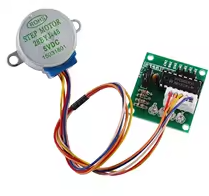
28BYJ-48 Stepper Motor + ULN2003 Driver Board Kit
4-Phase 5V/12V Stepper Motor for Arduino DIY Projects
The 28BYJ48 is a small, affordable 4phase unipolar stepper motor with a 5V or 12V rating, commonly paired with the ULN2003 driver board for Arduino projects. Its compact size and reliable performance make it ideal for automation, robotics, and DIY kits.
LowCost Precision Simple 5-wire unipolar design with easy ULN2003 integration
High Gear Reduction Builtin 64:1 gearbox provides increased torque
Motor supply voltage: 5V DC (model 28BYJ485V) or 12V DC (model 28BYJ4812V)
Use the ULN2003 driver board for direct interfacing with Arduino without damaging the microcontroller pins
Check voltage rating - 5V motors may overheat when powered at 12V
Technical Specifications
| Parameter | Value |
|---|
| Voltage Options | 5V or 12V DC |
| Phase Resistance | 50Ω (5V) / 200Ω (12V) |
| Step Angle (Full-Step) | 11.25° (32 steps/rev internal) |
| Step Angle (Half-Step) | 5.625° (64 steps/rev internal) |
| Gear Ratio | 64:1 |
| Reduction Ratio | 1/64 |
| Rated Speed | 10 RPM |
= Key Features =
Simple 5Wire Connection Color-coded wires (BLUE, PINK, YELLOW, ORANGE, RED) connect directly to ULN2003 driver board
4Phase Control Compatible with Arduino Stepper library for easy programming
Builtin Gearbox 64:1 ratio provides significant torque multiplication
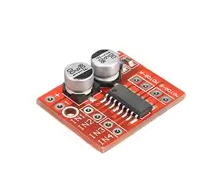
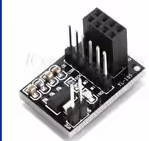
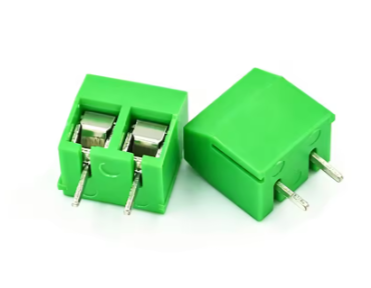
ULN2003 Driver Board Included Readyto-use with screw terminals for motor connection
= Applications =
- 3D printers and CNC machines
- Robotics and animatronics
- Automated blinds and A/C units
- Camera positioning systems
- Office automation equipment
- STEM education and Arduino DIY kits
Widely Used - Affordable and effective for precise motion in various DIY projects
Complete Kit - Includes motor, driver board, and connection cable
√ Requires only 4 digital pins on Arduino
√ ULN2003 driver includes builtin clamping diodes for motor backEMF protection
√ 5pin connector socket included on driver board for plugand-play installation
Connection Guide
Motor wires to ULN2003 driver:
- BLUE: OUT1 (or coil 1)
- PINK: OUT2 (or coil 2)
- YELLOW: OUT3 (or coil 3)
- ORANGE: OUT4 (or coil 4)
- RED: Common power (to 5V or 12V)
ULN2003 driver to Arduino:
- IN1: Arduino Pin 8 (example)
- IN2: Arduino Pin 9 (example)
- IN3: Arduino Pin 10 (example)
- IN4: Arduino Pin 11 (example)
- +: Connect to 5V/12V power supply
- -: Connect to power supply ground
Connect Arduino GND to driver board GND for stable signal reference
Use a separate power supply for the motor to avoid noise on the Arduino's 5V line
The ULN2003 driver board uses the same 5V or 12V supply as the motor
Calculation of Steps per Revolution
The effective step count per full revolution, accounting for the gear ratio, is crucial for accurate positioning.
- Half-Step Mode (Recommended): 64 internal steps × 64:1 gear ratio = 4096 steps per full revolution
- Full-Step Mode: 32 internal steps × 64:1 gear ratio = 2048 steps per full revolution
Use half-step mode for smoother operation at lower speeds
For most projects, use 2048 steps for fullstep mode or 4096 for halfstep mode
The motor's slow speed (10 RPM) is a result of the gear reduction providing high torque
Troubleshooting
Motor not rotating:
- Check power supply (5V for 5V motor, 12V for 12V motor)
- Verify pin connections and wire order
- Avoid loose or damaged connector cables
Motor stalls or vibrates:
- Reduce speed (RPM setting)
- Use half-step mode for smoother operation
- Ensure power supply can provide sufficient current (~300mA per motor)
Wrong rotation direction:
- Swap any two coil wires (e.g., BLUE and PINK) at the driver board
- Or change step parameter to negative
Motor gets hot:
- Check voltage matches motor rating
- Reduce duty cycle or allow cooling between runs
- Avoid high-speed operation for extended periods