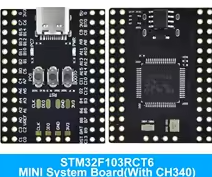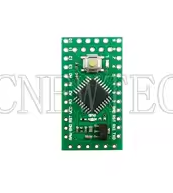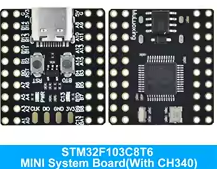
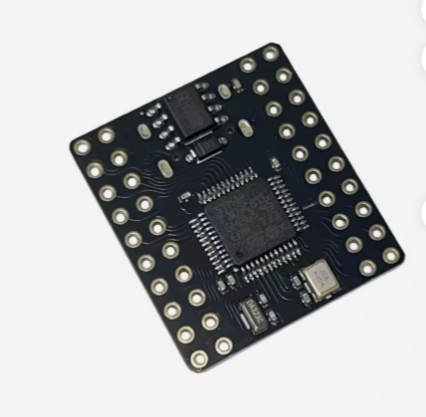
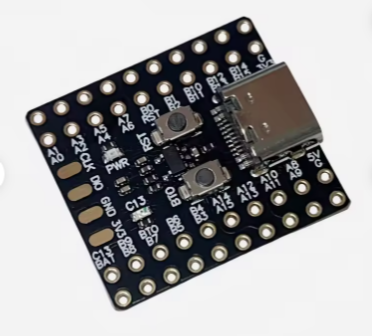
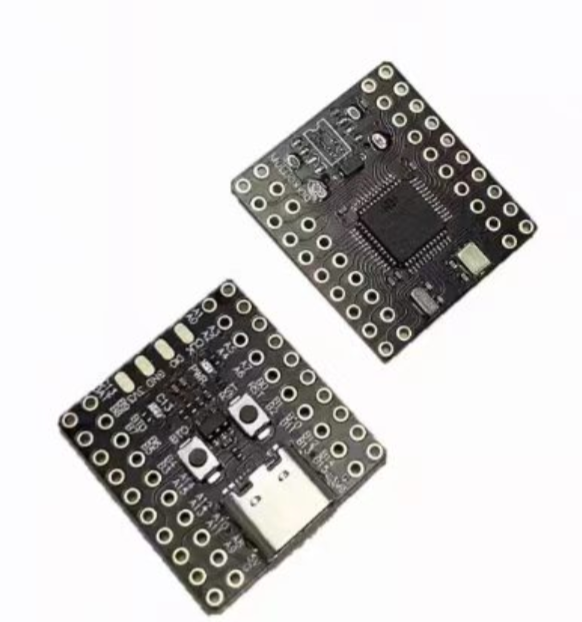
STM32F103C8T6 Minimum System Development Board
ARM Cortex-M3 MCU Core for Advanced Embedded Projects
The STM32F103C8T6 is a 32bit ARM CortexM3 microcontroller board (often called the "Blue Pill"), offering a cost-effective yet powerful platform for embedded development at 72MHz with 64KB Flash and 20KB SRAM[citation:1][citation:3].
HighPerformance ARM Core 72MHz Cortex-M3 with 1.25 DMIPS/MHz
Rich Peripheral Set - 37 GPIO, 10 ADC channels, and multiple communication interfaces[citation:1][citation:2]
Supply voltage is 2.0V to 3.6V - use a stable 3.3V supply for reliable operation[citation:1][citation:3]
Uses SWD interface (SWCLK/SWDIO) for programming via STLink or JLink debuggers[citation:6]
GPIO pins are not 5V tolerant - always use level shifters for 5V devices[citation:1][citation:3]
Technical Specifications
| Parameter | Value |
|---|
| Core | ARM CortexM3 32bit RISC[citation:1][citation:3] |
| Clock Speed | Up to 72MHz[citation:1][citation:6] |
| Flash Memory | 64KB (expandable variants)[citation:1][citation:3] |
| SRAM | 20KB[citation:3][citation:6] |
| GPIO Pins | 37[citation:1][citation:3] |
| ADC Channels | 10 channels x 12-bit[citation:3] |
| Timers | 7 (including PWM and encoder interfaces)[citation:3] |
| Communication | 3x USART, 2x SPI, 2x I2C, 1x CAN, USB 2.0[citation:1][citation:2] |
| Debug Interface | SWD and JTAG[citation:6] |
= Key Features =
HighSpeed 32bit Core - 72MHz performance with hardware divide
Flexible Communication - USART, SPI, I2C, and CAN support[citation:1][citation:2]
Advanced Timers - PWM, input capture, and encoder modes for motor control[citation:3]
Analog Capability 12bit ADC with multiple channels for sensor interfacing[citation:2][citation:3]
Low Power Modes Sleep, stop, and standby for energyefficient projects[citation:1]
SWD Debug Interface Easy programming and debugging with STLink[citation:6]
= Applications =
- Embedded systems and microcontroller learning[citation:1][citation:3]
- Motor control and robotics projects[citation:3]
- Industrial automation and PLC systems[citation:1][citation:2]
- IoT and sensor network nodes[citation:1][citation:3]
- Medical equipment and monitoring devices[citation:1][citation:2]
- Home automation and consumer electronics[citation:1][citation:2]
Extremely CostEffective Affordable development board with professional capabilities
Extensive Ecosystem - Supports STM32CubeIDE, Keil, IAR, and Arduino IDE[citation:3]
√ SWD programming interface ready
√ USB power option via Micro-USB
√ Onboard user LED and reset button[citation:6]
Development and Programming
The board supports multiple development environments including STM32CubeIDE, Keil MDK, IAR EWARM, and Arduino IDE[citation:1][citation:3]. Programming requires an ST-Link V2 programmer connected via the SWD interface (SWCLK and SWDIO pins)[citation:6]. For peripheral configuration, STM32CubeMX provides an easy graphical setup.
Use STM32CubeMX for quick peripheral configuration[citation:3]
Select "Generic STM32F103C8T6" board in Arduino IDE with STM32duino core[citation:1][citation:3]
Core voltage is 3.3V - do not apply 5V to any GPIO
BOOT0 must be GND for normal operation (SWD programming bypasses boot mode)[citation:3]
Troubleshooting
Firmware upload fails:
- Check SWD connections (SWCLK, SWDIO, GND, 3.3V)[citation:5][citation:6]
- Ensure board is powered (3.3V via ST-Link or USB)[citation:6]
- Verify correct target MCU selected (STM32F103C8T6)
- If using USBtoserial, BOOT0 must be set to HIGH during programming[citation:1]
Board not recognized by PC:
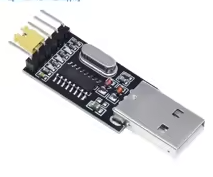
- Install ST-Link or CH340 USB drivers[citation:3]
- Use a known good USB cable (data-capable)
- Avoid connecting multiple power sources simultaneously